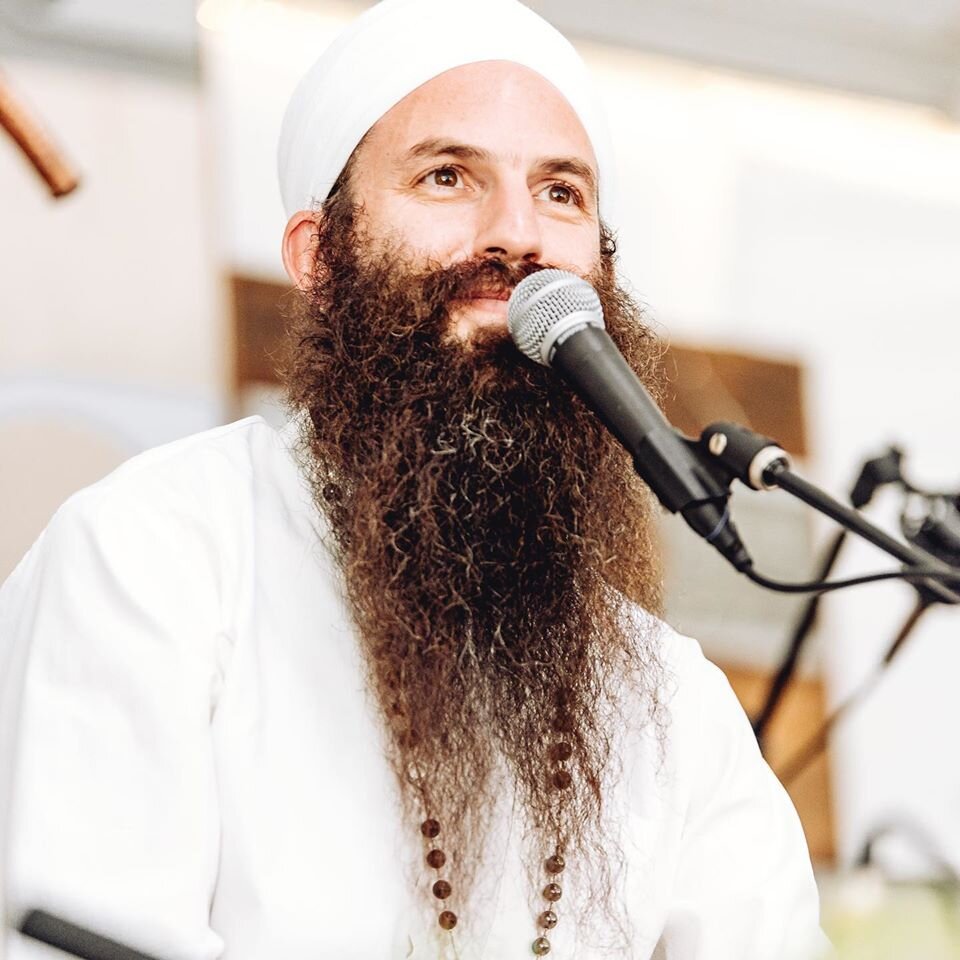
What is Sacred Chant?
Sacred chant is the iterative speaking or singing of words or sounds, often primarily on one or two main pitches called reciting tones. Unlike ordinary singing, sacred chant functions as a liturgical or devotional practice in which vocalization becomes an act of prayer, meditation, or communion with the divine. The vocal melody belongs to a liturgical office and forms an integral part of the sacred function, differing from sacred music in that the latter may adorn a religious service without absolutely belonging to it.
Sacred chant appears in virtually every major religious tradition: Gregorian chant, Vedic chant, Quran reading, Islamic Dhikr, Baháʼí chants, various Buddhist chants, various mantras, Jewish cantillation, and the chanting of psalms and prayers in Roman Catholic, Eastern Orthodox, Lutheran, and Anglican churches. The practice also includes call-and-response or antiphonal style song or chant, set to music, wherein multiple singers recite the names of a deity, describe a legend, express loving devotion to a deity, or discuss spiritual ideas.
Origins & Lineage
Vedic chant, religious chant of India and the expression of hymns from the Vedas, the ancient scriptures of Hinduism, dates back at least 3,000 years and is probably the world’s oldest continuous vocal tradition. The Vedas and the Upanishads, which are among the world’s oldest religious texts, describe the power of sound in minute detail, elaborating on how certain mantras, when properly recited, reveal Ultimate Reality.
In the Western Christian tradition, the chant grew originally out of the music of the Jewish ritual, as the first Christians brought into their worship the ancient Jewish custom of chanting aloud the books of the Bible. Gregorian chant is named after St. Gregory I, during whose papacy (590–604) it was collected and codified. However, modern academics have tended to downplay the role Pope Gregory I played, claiming he was more of an organizer collecting, revising and assigning the chants to specific services, and instead point to the Carolingian dynasty as responsible for Gregorian Chant’s popularity and spread. Charlemagne, king of the Franks (768–814), imposed Gregorian chant on his kingdom, and during the 8th and 9th centuries, a process of assimilation took place between Gallican and Gregorian chants.
In India, Bhakti Yoga as a devotional path emerged out of the Bhakti movements of 7th century medieval India, beginning in the region known today as Tamil Nadu, when chanting moved from being a ritual injunction of the Vedas to a way of connecting to the transcendent in a more personal and celebratory way. The first extant sources with musical notation for Gregorian chant were written around 930 (Graduale Laon).
How It’s Practiced
Sacred chant takes many forms depending on tradition. Gregorian chant is monophonic, or unison, liturgical music of the Roman Catholic Church, used to accompany the text of the mass and the canonical hours, or divine office. It is unaccompanied, meaning that there are no musical instruments accompanying the singing, and it is monophonic, which means that there is just one melodic line followed by all the singers.
Kirtan, with roots in the Vedic anukirtana tradition, is a call-and-response or antiphonal style song or chant, set to music, wherein multiple singers recite the names of a deity, describe a legend, express loving devotion to a deity, or discuss spiritual ideas. Kirtan is generally a group performance, typically with a call and response or antiphonal musical structure, and generally includes two or more musical instruments, and has roots in Sanskrit prosody and poetic meter.
In the Theravada Buddhist tradition, chanting is usually done in Pali, and mainly from Pāli Canon. Tibetan Buddhist chant involves throat singing, where multiple pitches are produced by each performer. Chanting is often done in a group setting, such as congregational singing in churches, kirtan in Hinduism, or zikr in Sufi Islam, and group chanting can create a sense of community and collective spiritual energy.
Sacred Chant Today
Contemporary seekers encounter sacred chant in diverse settings. Gregorian chant was standard in the Mass in the 1950s, but fell out of favor after the Second Vatican Council, though it has regained popularity in the past few decades. Kirtan became more common with the spread of Indian religious movements in the West in the 1960s, with movements including the International Society for Krishna Consciousness (ISKCON), 3HO (Sikh followers of Yogi Bhajan), the Ramakrishna mission, the Divine Life Society, and Yogananda’s Self-Realization Fellowship.
Western kirtan performers include Krishna Das, Bhagavan Das, Nina Rao, Wah!, Jai Uttal, Snatam Kaur, Lokah Music, Deva Premal, Jahnavi Harrison, Jim Gelcer, Jyoshna, Aindra Das, Gina Sala’, and Gaura Vani & As Kindred Spirits. Sacred chant now appears in yoga studios, meditation centers, interfaith gatherings, retreat centers, Benedictine monasteries offering Vespers services, and through recordings marketed for meditation and relaxation.
Common Misconceptions
Sacred chant is not background music for relaxation, though it may produce calming effects. The practice is fundamentally liturgical or devotional in intention. Not all sacred chant is melodically simple—some traditions feature highly complex structures requiring years of training. Chants range from the simple musical recitation of a text to the most elaborate and expressive melodies.
Sacred chant should not be conflated with mantra repetition in all cases. While kirtans and bhajans share common aims, a bhajan is freer and can be a single melody performed by a single singer, while kirtan is generally a group performance with call and response structure. Additionally, the historical origins of some chant traditions remain debated—for many years scholars believed that the Jewish Psalms were the foundations of early Christian rituals and chants, but since the mid-1990s scholars have distanced themselves from this old theory.
How to Begin
For those interested in Gregorian chant, locate a Benedictine or Trappist monastery offering public Vespers or Compline services. Recordings by the Benedictine Monks of Santo Domingo de Silos provide accessible listening.
For kirtan, seek out local yoga studios, Bhakti Yoga centers, or ISKCON temples that host weekly gatherings. Recordings by Krishna Das, particularly “Live on Earth,” offer an entry point. Jai Uttal’s work blends traditional and contemporary approaches.
For Buddhist chant, Plum Village (Thich Nhat Hanh’s tradition) offers simple, accessible group chanting in multiple languages. The Tibetan tradition requires more specialized instruction; locate a dharma center in the Gelug, Kagyu, Nyingma, or Sakya lineages.
For Jewish cantillation, attend Shabbat services at a synagogue with an active cantor. For Islamic chant, recordings of Quran recitation (Tajweed) by Sheikh Abdul Basit or Sheikh Mishary Rashid Alafasy demonstrate the art form.



.png)