What is Vinyasa?
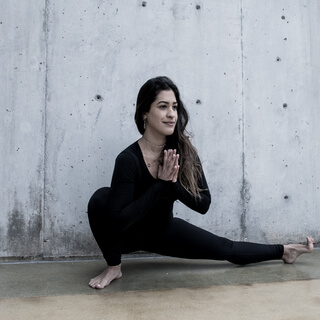
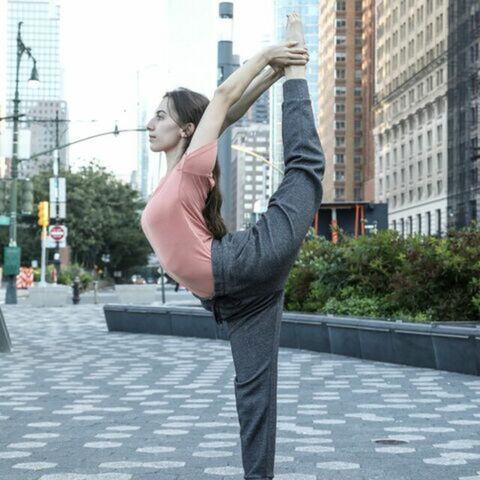
Vinyasa is a style of yoga characterized by the synchronization of breath with continuous movement through a series of postures. Unlike static approaches, vinyasa emphasizes fluid transitions—each inhale and exhale corresponds to a specific movement or held position. The term is used both narrowly, to describe a particular transitional sequence (typically plank-chaturanga-upward dog-downward dog), and broadly, to name an entire approach to practice where postures flow together rather than being practiced in isolation.
In contemporary studios, “vinyasa” typically signals a physically dynamic class with varying sequences, distinguishing it from the fixed series of Ashtanga or the alignment-focused holds of Iyengar yoga. The practice demands present-moment awareness: practitioners must coordinate breath, gaze (drishti), and bandhas (energetic locks) while moving through space.
Origins & Lineage
Vinyasa as a structured method emerged from the Ashtanga Vinyasa system developed by T. Krishnamacharya (1888–1989) in Mysore, India during the early 20th century. Krishnamacharya, often called the “father of modern yoga,” adapted traditional hatha yoga texts—including the Yoga Korunta (a text of disputed provenance)—into a vigorous, breath-synchronized practice suitable for young students at the Mysore Palace.
His student K. Pattabhi Jois (1915–2009) codified this approach into Ashtanga Vinyasa Yoga, establishing six fixed series of increasing difficulty. Jois opened the Ashtanga Yoga Research Institute in Mysore in 1948, where he taught the method that would become the foundation for most modern vinyasa practices. Western students began arriving in significant numbers during the 1970s, and by the 1990s, graduates of Jois’s shala were teaching worldwide.
The contemporary “vinyasa flow” style represents an evolution from this lineage. Teachers trained in Ashtanga—including figures such as Shiva Rea, Seane Corn, and Baron Baptiste—began creating variable sequences rather than adhering to Jois’s fixed series, adapting the breath-movement principle to diverse student populations and contemporary contexts. This creative interpretation distinguishes vinyasa from its Ashtanga parent while retaining the core principle of movement and breath as unified.
How It’s Practiced
A vinyasa class typically begins with centering and breath awareness, often incorporating ujjayi pranayama—a controlled breathing technique that produces an audible sound at the back of the throat. Students move through sun salutations (surya namaskar) to build heat, then progress through standing poses, balances, seated postures, and inversions before concluding with savasana (corpse pose).
The defining feature is the vinyasa transition itself: from a standing or seated position, students step or jump back to plank, lower through chaturanga dandasana (four-limbed staff pose), flow through upward-facing dog, and press back to downward-facing dog. This sequence recurs between standing postures, functioning as both transition and cardiovascular challenge.
Teachers cue the breath explicitly—“inhale, reach arms up; exhale, fold forward”—creating a moving meditation where breath serves as both metronome and anchor for attention. The pace varies: some classes move quickly (one breath per movement), while slower “vinyasa flow” classes hold poses for three to five breaths. Unlike Ashtanga’s fixed sequence, vinyasa teachers design unique flows, themed around peak poses, energetic qualities, or anatomical focus areas.
Physically, vinyasa builds heat (tapas), cardiovascular endurance, and functional strength. The continuous movement distinguishes it from the longer holds of yin or restorative styles.
Vinyasa Today
Vinyasa has become the dominant style in Western yoga studios, particularly in urban centers. Studios offer classes labeled “vinyasa flow,” “power vinyasa,” or simply “flow,” typically in heated rooms (though not universally). Online platforms—including Yoga International, Alo Moves, and Glo—feature thousands of vinyasa recordings, making the practice accessible beyond studio walls.
Retreats frequently incorporate vinyasa alongside meditation and pranayama practices. Teacher training programs often use vinyasa as the foundational method, with 200-hour certifications emphasizing sequencing principles, breath cueing, and the biomechanics of transitions.
The style’s adaptability has spawned numerous hybrids: vinyasa-yin fusion classes, vinyasa with live music, aquatic vinyasa on paddleboards, and trauma-informed vinyasa emphasizing student agency. This creative proliferation has generated both innovation and concern about dilution of traditional methods.
Common Misconceptions
Vinyasa is not simply “fast yoga” or “yoga with movement.” All hatha yoga traditions involve movement; vinyasa specifically links each breath to each movement in a continuous flow. It is not inherently superior to or more “authentic” than other styles—it represents one interpretation of hatha yoga principles, adapted for specific contexts and populations.
Vinyasa is not equivalent to Ashtanga. While Ashtanga is a vinyasa method (hence “Ashtanga Vinyasa Yoga”), vinyasa as practiced in most studios omits Ashtanga’s fixed series, sanskrit counting, and emphasis on daily mysore-style self-practice. The relationship is genealogical, not synonymous.
The practice is not inherently safe or appropriate for all bodies. The repetitive chaturanga transitions can strain shoulders and wrists; the pace may not suit practitioners requiring more time to establish alignment; the heat generated may be contraindicated for certain conditions. Vinyasa’s popularity has sometimes overshadowed gentler methods better suited to therapeutic contexts.
How to Begin
Beginners should seek classes explicitly labeled “vinyasa basics,” “beginner flow,” or “slow flow.” These typically break down the fundamental transitions, teach ujjayi breathing, and offer modifications for common poses. Many studios offer free or discounted first classes; online platforms provide filtered searches for beginner-appropriate content.
Key texts for understanding vinyasa’s roots include K. Pattabhi Jois’s Yoga Mala (1962), which outlines the Ashtanga method from which modern vinyasa evolved, and Gregor Maehle’s Ashtanga Yoga: Practice and Philosophy (2006), which explicates the breath-movement connection. For contemporary vinyasa sequencing, Shiva Rea’s Tending the Heart Fire (2014) offers principles of creative flow design.
Practitioners benefit from developing a functional understanding of ujjayi pranayama before attempting faster-paced classes. The breath should remain steady and audible throughout practice; if breath becomes ragged or held, the pace is too aggressive. Starting with three sun salutations and a simple standing sequence—practiced with attention to breath-movement coordination—establishes the foundation better than attempting complex flows prematurely.